
AI second opinion for MRI, CT & X-ray
Make sense of your scan.
AI-assisted explanations of your images, in plain language, to discuss with your doctor.
Raw files stay on your device. Only rendered images are sent to AI providers when you choose analysis.
Independent read — not a diagnosis
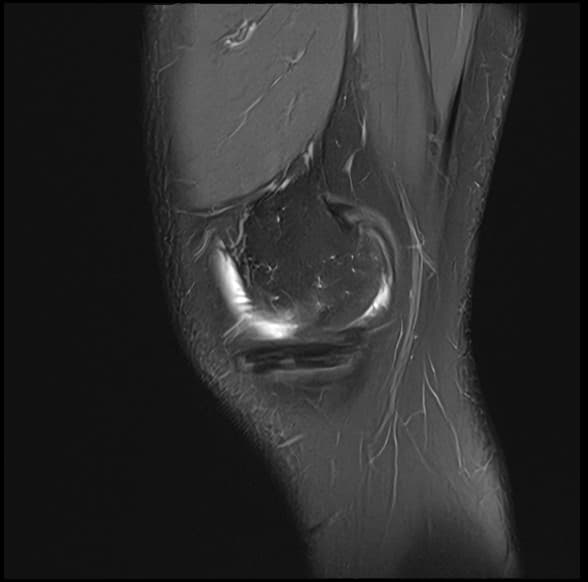
Illustrative example
Knee · MRI
Choose your body part










What your report can help explain
“What did those words even mean?”
The report explains imaging terms in plain language to help you prepare questions for your doctor.
“Is something actually torn?”
AI can help explain ligament, tendon and meniscus findings for review with your doctor.
“How much wear is there?”
Explore cartilage and osteoarthritis terminology with an AI-assisted explanation.
“Is it healing?”
Compare a follow-up scan against an earlier one and see what changed between the two — in plain language.
From your scan to a clearer conversation
Open your body part site
Pick a body part above and drop in your MRI, CT or X-ray — DICOM, ZIP or PDF.
Review your images
Use the viewer to explore your scan before choosing an AI analysis.
Get a consensus report
The AI consortium returns a structured, explainable report you can bring to your doctor.
Private by design
- Your raw DICOM, ZIP and PDF files open in your browser and stay on your device.
- Only when you request an AI report are rendered images and minimal context sent to our relay.
- Our relay forwards those images to AI providers (OpenAI, Google, Anthropic, xAI) and does not store them.
JointLens provides imaging analysis support only — it is not a medical diagnosis and does not replace professional medical advice.
Several AI models, one report
Their findings are combined into one report for discussion with your doctor. AI can be wrong.
GPT-6.1 Sol
Gemini 3.8 Flash
Claude Opus 5.5
Grok 4.7
Model line-up evolves as new frontier models are released.
Frequently asked questions
Is JointLens a replacement for a radiologist?
No. JointLens provides an independent AI-assisted review of your imaging to help you understand it — many patients use it as an AI second opinion alongside their doctor. It is not a medical diagnosis, and your doctor makes all clinical decisions.
Can JointLens reports be used for insurance or surgery claims?
No. Think of JointLens as clarity for you and a better starting point for the conversation with your doctor. Clinical decisions and official paperwork always stay with your treating physician.
Which file formats can I analyze?
DICOM files, ZIP archives of DICOM studies, and PDF reports are supported across MRI, CT, X-ray and CBCT imaging.
What does the AI consortium actually do?
Several AI models review your images independently. Their findings are combined into one report for discussion with your doctor. AI can be wrong.
Which body parts are supported?
Knee, ankle, shoulder, hip, spine, elbow, wrist, hand, dental, foot and neck — each with a dedicated site whose models and prompts are tuned for that anatomy.